
Naprawa i serwis serwonapędów
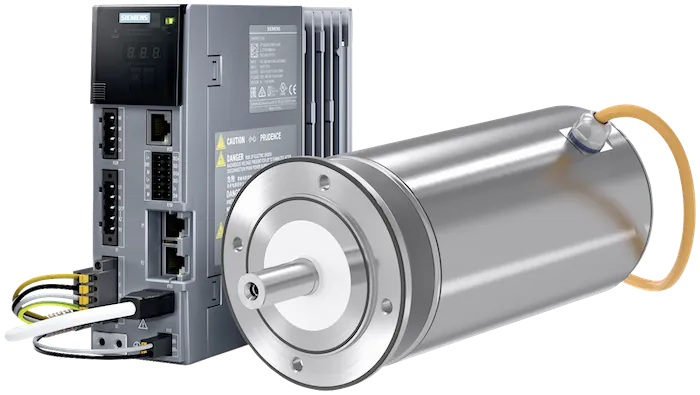
ZAKRES USŁUG
Oferujemy szeroki zakres profesjonalnych napraw serwonapędów, obejmujący między innymi:
Testowanie i wymiana modułów IGBT, MOSFET, tranzystorów i innych kluczowych komponentów.
REGENERACJA UKŁADÓW STEROWANIA
Naprawa i wymiana uszkodzonych płyt PCB, procesorów sygnałowych oraz układów logicznych.
SERWIS ZASILACZY I PRZETWORNIC
Naprawa i wymiana kondensatorów, dławików oraz elementów stabilizujących napięcie.
Obsługa i naprawa systemów PROFIBUS, CAN, EtherCAT, SERCOS, DeviceNet itp.
NAPRAWA SPRZĘŻENIA ZWROTNEGO
Serwis i wymiana uszkodzonych enkoderów, resolwerów oraz czujników Halla.
KALIBRACJA UKŁADÓW POMIAROWYCH
Precyzyjna kalibracja czujników i układów pomiarowych zapewniająca dokładność odczytów.
Archiwizacja i przywracanie oprogramowania serwonapędów.
MODERNIZACJA OPROGRAMOWANIA
Aktualizacja firmware’u oraz wgrywanie najnowszych wersji oprogramowania sterującego.
TESTY POD OBCIĄŻENIEM
Sprawdzanie poprawności działania napędu w rzeczywistych warunkach pracy.
REPAIR PROCESS
We provide a professional process of diagnostics, repair, maintenance and care of the cooling system of electronic devices and industrial automation, the goal of which is to extend the lifespan of devices and minimize the risk of failures causing costly downtimes.
-

Initial diagnostics
The first step in repairing electronic devices used in industrial automation is to conduct detailed diagnostics. Its purpose is to identify the cause of the failure and assess the scope of the repair. As part of the diagnostics, we perform, among other things:
- Checking electronic components for their electrical parameters and physical condition.
- Assessing the mechanical condition of the device, including detecting damage to the printed circuit board (PCB), soldered connections, or connectors.
- Measuring voltages and currents at key points of the circuit to detect overloads, short circuits, or breaks.
- Analyzing control and communication signals that affect the operation of the device.
-

Location and replacement of damaged components
After identifying the source of the problem, we proceed to repair or replace damaged components. This process may include:
Replacement of damaged components, such as:
- electrolytic capacitors,
- power transistors,
- integrated circuits,
- mechanical relays,
- rectifier diodes,
- power resistors,
- connectors and sockets,
- protective elements, e.g., thermal fuses,
- switches and potentiometers,
- coils and chokes,
- temperature sensors.
Repairing connections on the printed circuit board, including:
- soldering damaged or cold connections to restore conductivity,
- reconstructing interrupted traces using repair wires or special conductive lacquers.
Cleaning and maintenance of components, such as:
- removing corrosion from metal contacts and connectors,
- cleaning soiled mechanical elements, for example, potentiometers or switches,
- applying anti-corrosion preparations and technical lubricants to improve the operation of moving parts.
-

Maintenance and repair of the cooling system
The cooling system plays a crucial role in ensuring the proper operation of electronic devices, protecting them from overheating. As part of the maintenance and repair of the cooling system, we perform:
- cleaning radiators from dust and other contaminants that may restrict airflow,
- checking the operation of cooling fans, including the condition of their bearings, motors, and electrical connections; damaged fans are replaced with new ones,
- applying new thermal paste or thermal pads to optimize heat dissipation from key components, such as transistors or processors,
- modernizing the cooling system if the device's operating conditions require it, e.g., installing more efficient radiators or additional fans.
-

Testing and verification
After completing the repair and maintenance, the device undergoes a comprehensive testing process to ensure that it operates correctly and meets the manufacturer's requirements. Tests include:
- verification of basic functions, such as communication, responses to control signals, and operation under load,
- load tests to assess the reliability and stability of the device under actual operating conditions,
- checking the effectiveness of the cooling system, including temperature measurement of key components during operation,
- assessment of resistance to environmental conditions, such as vibrations, temperature fluctuations, or humidity.